Physics
Light Matter Energy Research
Physics
Light Matter Energy Research
Thermophotovoltaics
We work on thermophotovoltaic systems that convert thermal radiation into electricity using low-bandgap photovoltaic cells. The emphasis is on spectral control, selective emitters and thermal stability of the nanostructures, i.e., metamaterials/photonic crystals, so that radiated energy is delivered where the PV cell can use it. Coupled optical, electrical, and thermal modelling is used to identify the losses that separate real devices from their thermodynamic limits, with applications in waste-heat recovery, thermal energy storage, compact power generation, and thermal batteries.

Solar Catalysis for Hydrogen Generation
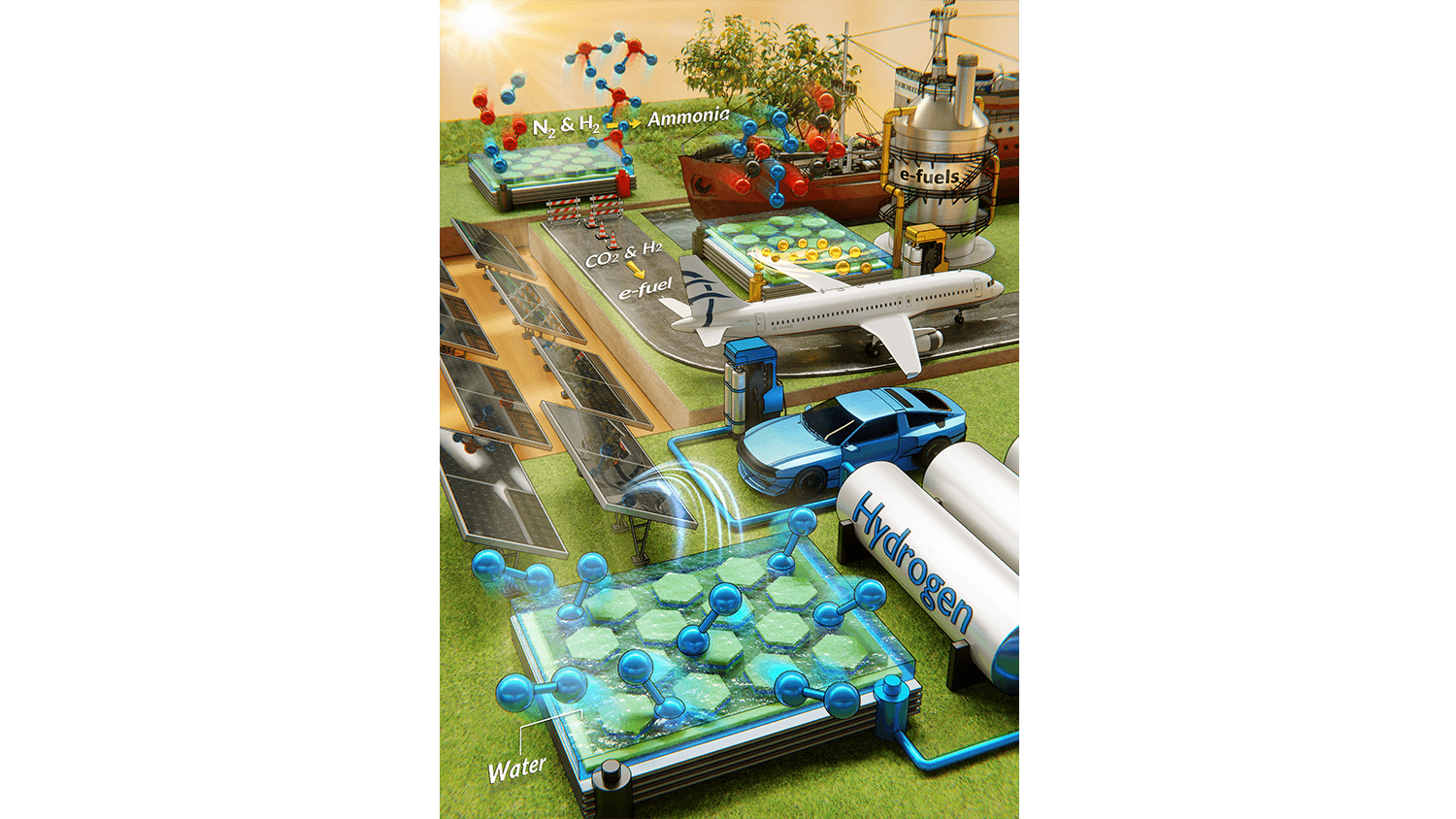
We develop solar catalysts that produce hydrogen directly from sunlight and water. The work covers semiconductor-metal photoelectrode materials, protective and passivating interface layers, and earth-abundant co-catalysts for the hydrogen or solar fuels generation. A central aim is to distinguish and address the bulk recombination, surface recombination, and catalytic losses that limit efficiency and stability.
Opportunities for students
Projects are available at all levels and range from nanofabrication and characterization to optical and device modelling. A background in solid-state physics, electrochemistry, or optics is useful, though the essential requirement is a willingness to work across the boundaries between them. Please get in touch if you would like to discuss possibilities.
Contact