News
New Robot Calibration Method Emerges from Collaboration
Published online: 26.11.2025
News
New Robot Calibration Method Emerges from Collaboration
Published online: 26.11.2025
New Robot Calibration Method Emerges from Collaboration
News
Published online: 26.11.2025
News
Published online: 26.11.2025
By Astrid Helene Mortensen, AAU Communication and Public Affairs
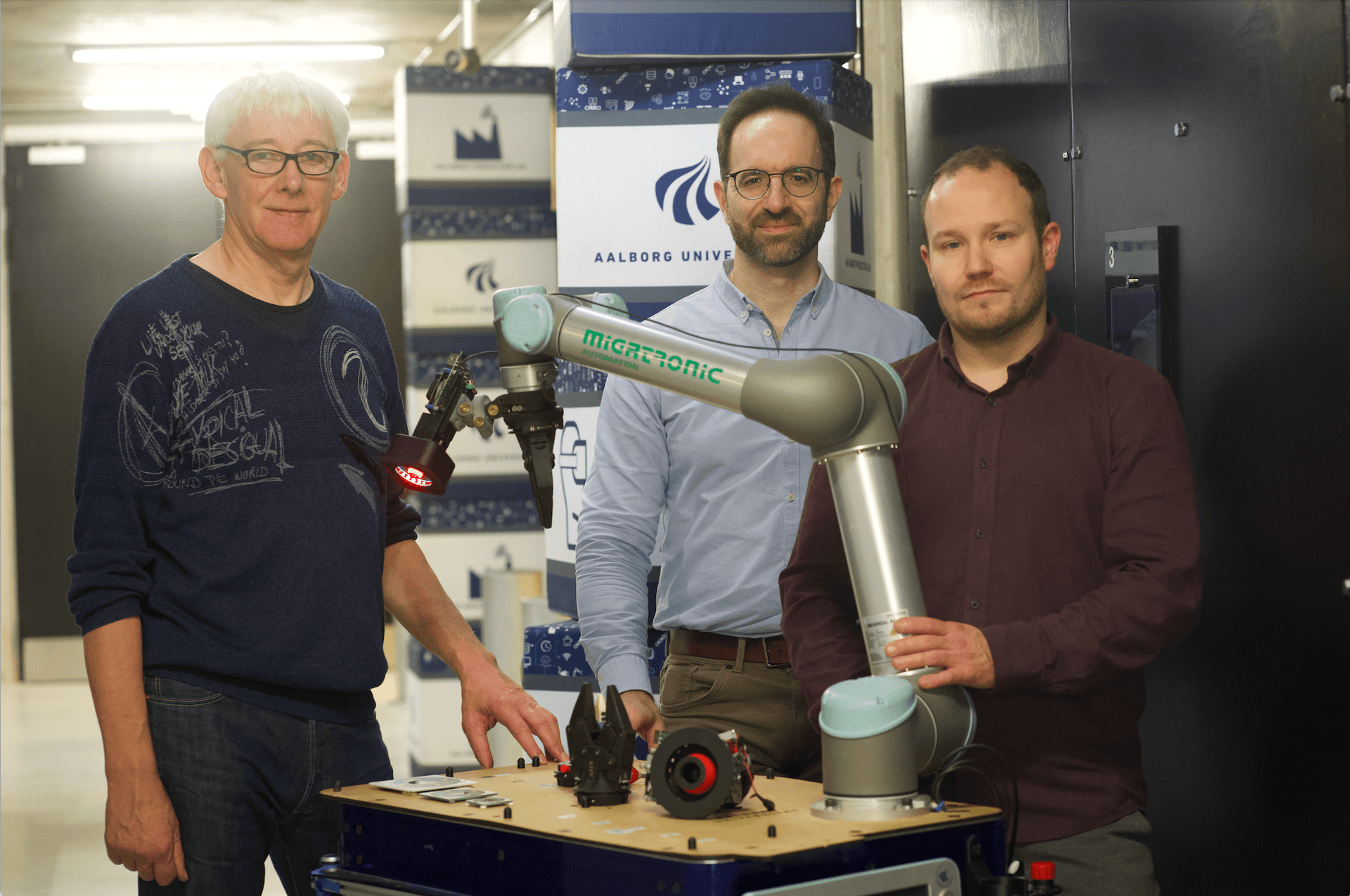
Associate Professor Casper Schou from Aalborg University’s Department of Materials and Production doesn’t recall exactly when he and his colleagues first met entrepreneur Henning Forbech, owner of the sole proprietorship 4Tech Robotics. But he clearly remembers what made an impression: Henning’s enthusiasm and inventiveness.
“He’s such a passionate person,” says Casper Schou. “An inventor who constantly comes up with new ideas.”
“The first time we met him, he had developed a tool changer for robots, which we were allowed to test here in the lab. That must be about ten years ago.”
The collaboration was formalized in 2019 through a research project under the then-existing RoboCluster, a network for Danish robotics companies. The project was launched as an open challenge, where Henning Forbech stepped forward.
“It was a relatively small project, with funding only for a demonstration,” explains Casper Schou. “But it was enough to get us started.”
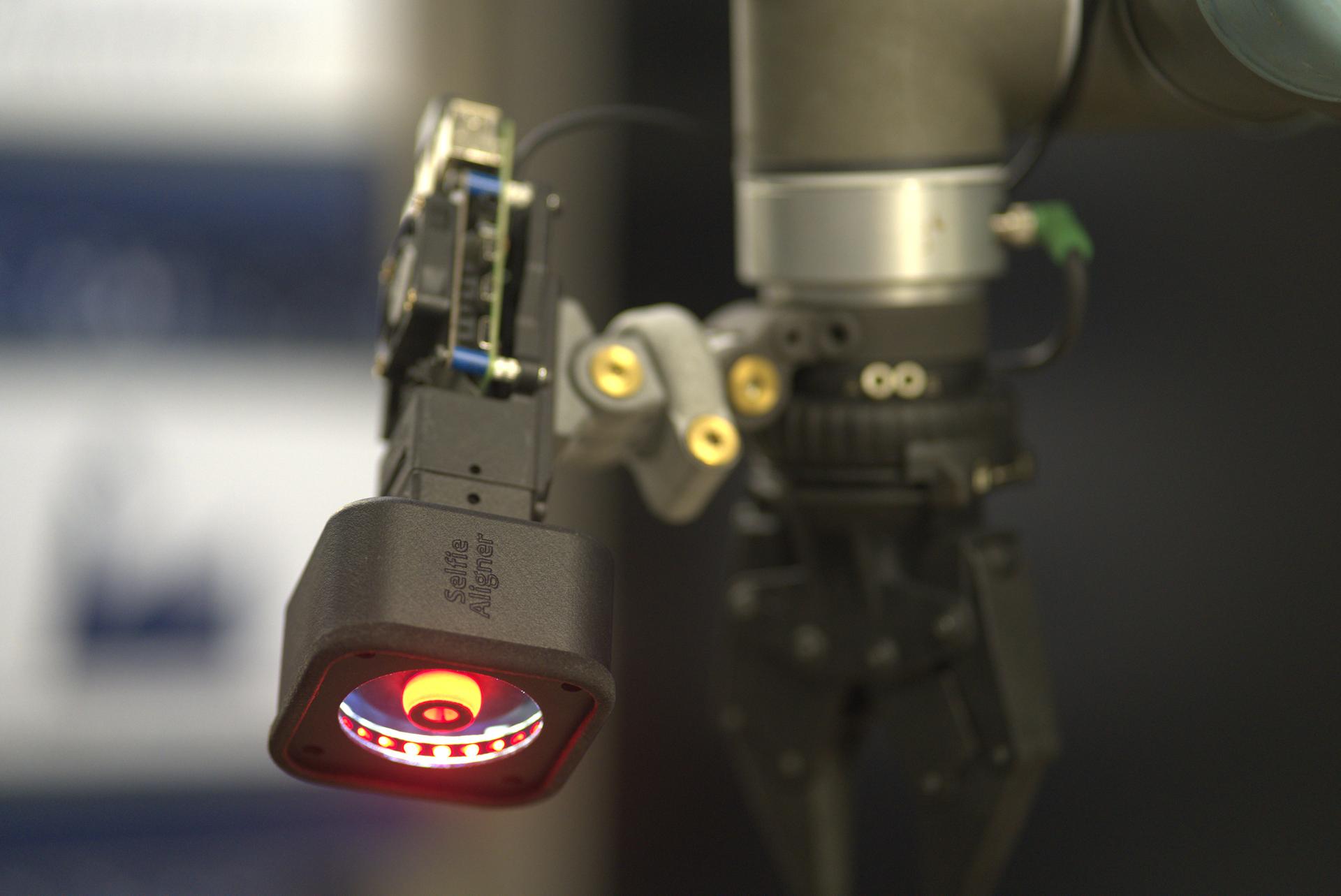
For many, the road from idea to finished product is long and filled with practical obstacles. When Henning Forbech came up with the idea for a faster and more precise way to calibrate robots, he encountered a classic challenge for entrepreneurs: he lacked access to robots and a place to test his prototype.
That’s where the university stepped in - offering academic sparring, test facilities, and technical expertise.
“Henning had the idea and the patent, and we had the robots, the laboratory, and the knowledge needed to test and further develop the method,” explains Casper Schou.
“Having access to the university’s equipment made it possible for me to bring the idea to life,” says Henning Forbech. “Without that opportunity, the project would never have happened.”
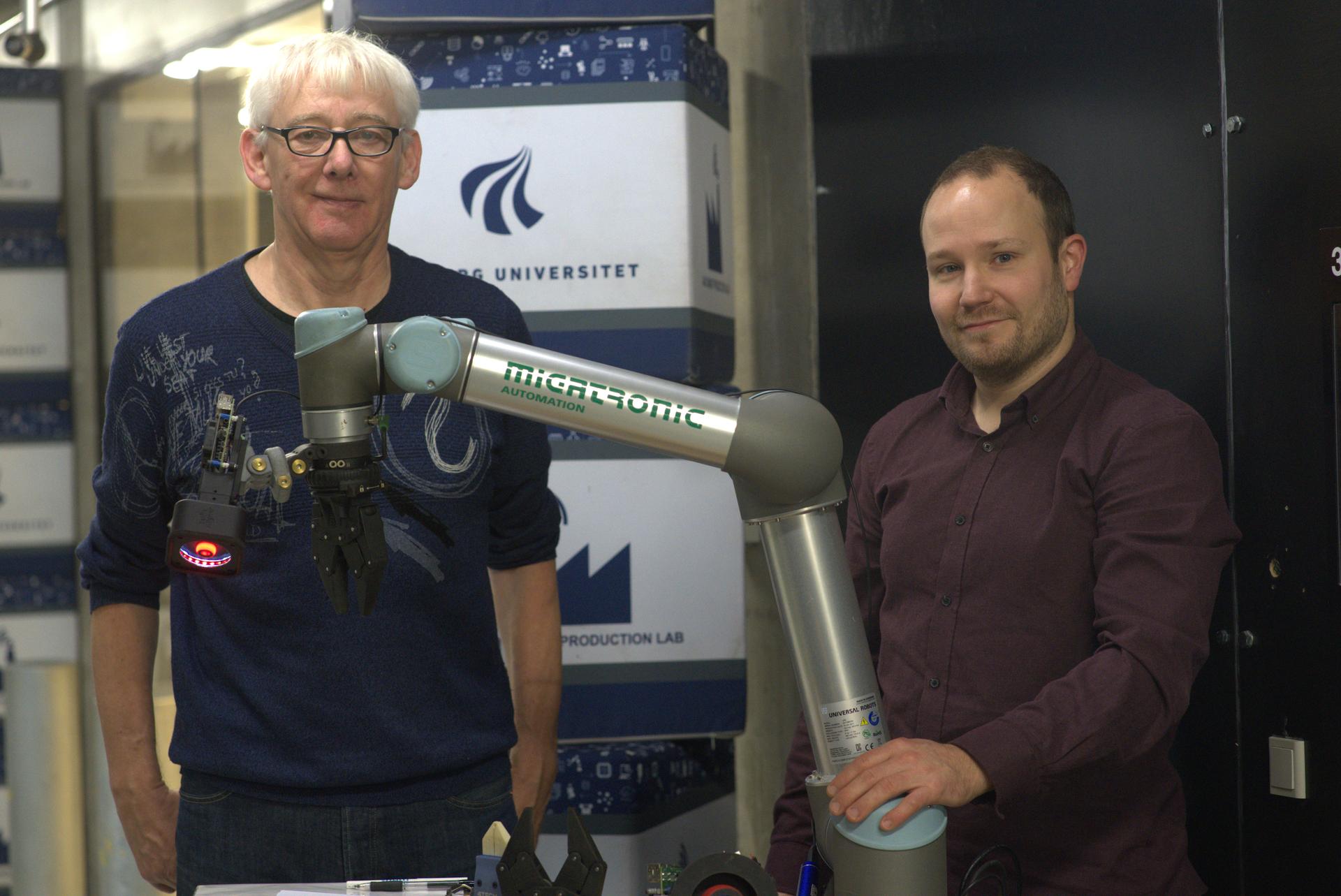
Casper Schou makes no secret of the fact that it was Henning Forbech who invented the method. But he emphasizes that the university’s role has been crucial.
“It’s not our own innovation, but we have contributed to it through our laboratories, our expertise, and our commitment,” he says.
The collaboration is an example of the kind of application‑driven research the university prioritizes - closely connected to the industry.
“Working in that intersection means everything to us. We conduct application‑driven research where companies’ challenges form the starting point. It makes sense when our research is used in practice.”
Close collaboration with companies, both large and small, is an integral part of the department’s DNA.
“For me, it feels completely natural,” says Casper Schou. “I thrive in it - and so do the students.”
The partnership has also brought new knowledge to both sides. Among other things, the researchers have gained insight into how small tolerances and movements in wheeled robots can affect precision in practice.
Facts
How it works:
The robot moves the camera iteratively until the marker is precisely centered in the image. This reduces the influence of lens distortion and significantly increases accuracy.
Precision: Down to 0.1 mm - about 20 times higher than existing systems.
Advantages:
Disadvantages:
Click here for further information about the Selfie Aligner.
The collaboration has resulted in an academic article that will be published early next year.
The article was co-written by Henning Forbech from 4Tech and Casper Schou and Dimitris Chrysostomou from the Department of Materials and Production.
“Publishing a research article in partnership with the university gives the project a whole new level of credibility,” says Henning Forbech.
Henning has now sold the patent and project to an international company that will market the technology worldwide. He continues to support the development of the prototype and the technology. The university follows the progress with great interest - not as an owner, but as a proud partner.
“It’s Henning’s story,” says Casper Schou. “But it’s also our story - a story about how, as a university, we can help turn good ideas into reality.”